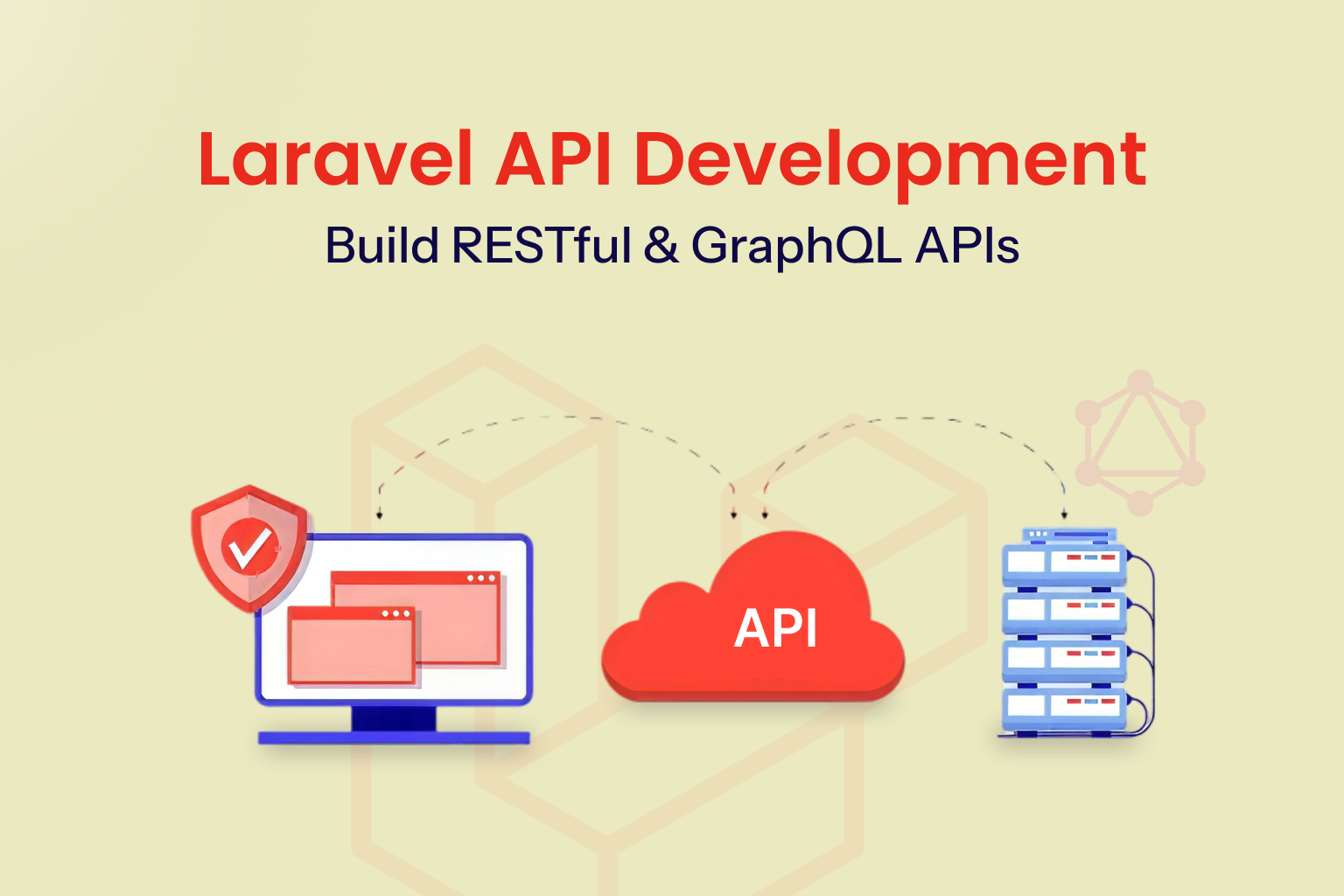
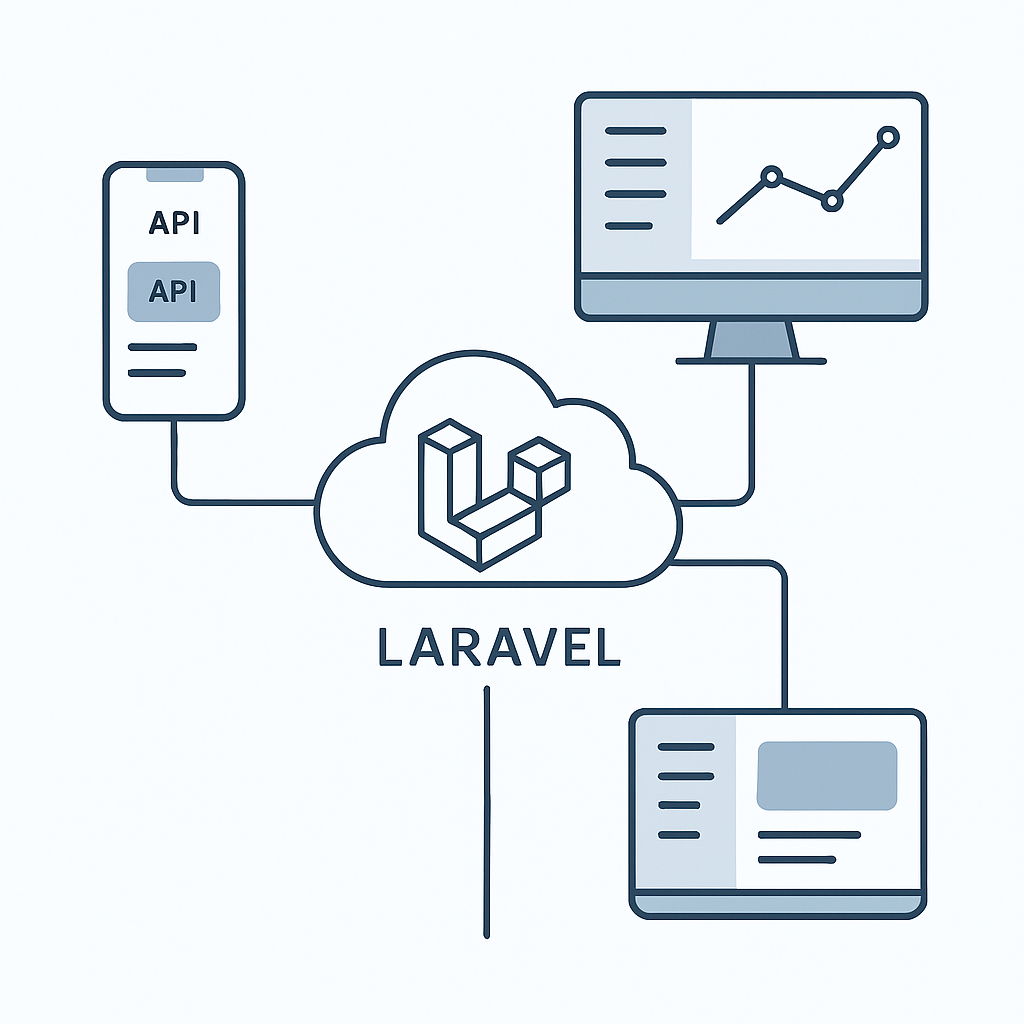
Imagine you own a food delivery business. You have a website, a mobile app for customers, and a tablet app for your delivery drivers. All these apps need to talk to the same central computer that holds the menu, customer addresses, and order status. How do they talk to each other?
They use something called an API.
Think of an API as a helpful messenger. Your customer app tells this messenger, “Hey, I need the menu.” The messenger runs to the kitchen (your server), grabs the menu, and brings it back to the app. A good API makes sure the right information gets to the right place, quickly and safely.
For efficient Laravel API Development, understanding REST and GraphQL is crucial. In the realm of Laravel API Development, the framework simplifies handling requests and responses.
Mastering Laravel API Development will allow you to deliver robust applications efficiently. When it comes to Laravel API Development, leveraging built-in features can greatly improve security.
Why Laravel?
Imagine you had to build a car. You could try to make your own engine, wheels, and seats from metal and rubber. That would take years. Or, you could buy a Lego set that has all the pieces ready to snap together. Laravel is that Lego set for building APIs.
Safety Features That Come Free
If you’re planning a full-scale application, understanding the Laravel development cost in 2026 helps you budget properly for API infrastructure, scaling, and security from the beginning. Laravel vs WordPress for business applications explains why Laravel offers greater flexibility for advanced API-driven platforms.
Laravel API Development includes features to guard against common vulnerabilities. When you build an API with Laravel, you get safety features already built in. You don’t need to be a security expert.
For businesses, Laravel API Development is essential for maintaining quality and trust. Performance tuning is a key aspect of Laravel API Development.
- Checks IDs at the Door: Laravel makes sure that only the right people can get into your system.
- Cleans Up Messy Data: Sometimes users send bad data that can break your site. Laravel cleans it up automatically.
- Ready-Made Login: Almost every app needs a login screen. Laravel gives you one that works right out of the box. This is part of what makes Laravel API authentication so easy.
A Tale of Two Protocols: Selecting Between REST and GraphQL in Laravel
Choosing the right API protocol is a strategic decision that impacts performance, developer experience, and flexibility. Laravel provides excellent support for both REST and GraphQL, allowing you to choose the best tool for your specific business needs.
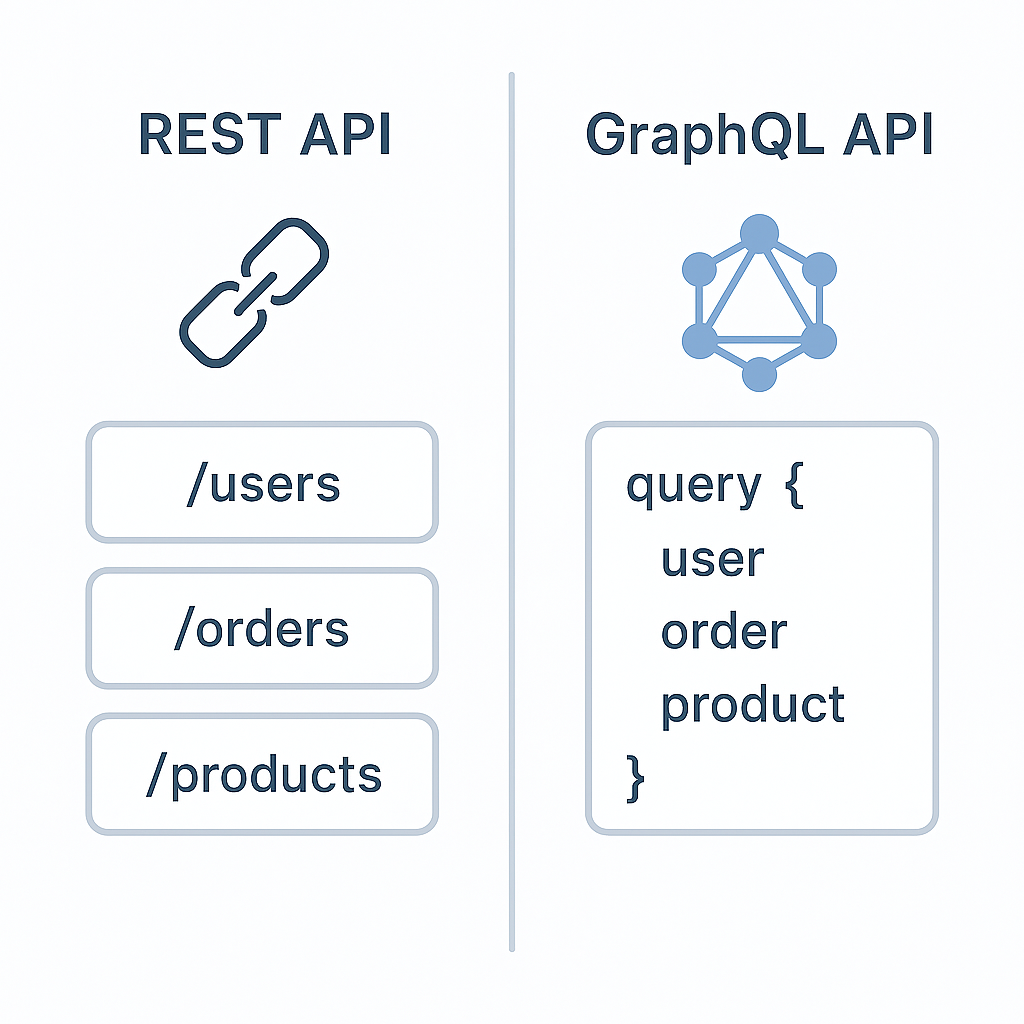
Difference between REST API and GraphQL API in a simple way. REST API uses multiple endpoints like /users, /orders, and /products, so you may need several requests to get different data. In contrast, GraphQL API uses a single endpoint where you can choose exactly which data fields you need in one request. In short, REST separates data into multiple URLs, while GraphQL lets you request specific data in a single call.
The Reliability of REST: Standardizing Your Digital Connections
REST (Representational State Transfer) is the established standard for API design. It’s predictable, stateless, and leverages the full power of HTTP, making it an excellent choice for many applications. REST is particularly well-suited for public-facing APIs where standardization and cacheability are paramount. Its resource-oriented structure is intuitive, making it easier for external partners and developers to understand and integrate with your services.
The Precision of GraphQL: Eliminating Data Waste and Boosting Performance
GraphQL offers a more flexible, query-based approach. It allows clients to request exactly the data they need—no more, no less—in a single request. This precision is a game-changer for applications with complex data requirements or those operating on variable network conditions, like mobile apps. By eliminating over-fetching and under-fetching of data, GraphQL can significantly improve performance and reduce bandwidth usage, leading to a faster, more responsive user experience.
Fortifying Your Digital Gateway: A Multi-Layered Approach to API Security
An insecure API is a liability. It can lead to data breaches, regulatory fines, and irreparable damage to your brand’s reputation. Laravel bakes security into its core, providing a multi-layered defense for your most critical digital assets.
- Robust Authentication: Laravel offers built-in solutions like Sanctum for simple token-based auth and Passport for full OAuth2 implementation, allowing you to choose the right level of security for your use case.
- Granular Authorization: The framework’s authorization features make it straightforward to implement complex business rules, ensuring users can only access the data and perform actions they are permitted to.
- Protection from Common Vulnerabilities: Laravel’s features, such as CSRF protection and input validation, help defend your API against common attack vectors like SQL injection and cross-site scripting out of the box.
Treating security as a foundational layer, not an add-on, is essential for building trust with your users and partners.
Performance Under Pressure: Optimizing Laravel APIs for Enterprise Demands
In the digital world, speed is currency. Slow API responses lead to frustrated users, abandoned transactions, and lost revenue. Laravel equips developers with the tools needed to build high-performance APIs that can withstand enterprise-level traffic.
Key optimization techniques include:
- Intelligent Caching: Laravel’s unified caching API allows you to store frequently accessed data in memory, dramatically reducing database load and response times.
- Eager Loading: This feature prevents the common “N+1 query problem,” where a single request inadvertently triggers dozens of database queries. By optimizing data retrieval, eager loading can slash response times.
- Database Query Optimization: The framework encourages efficient database interactions, and its tools make it easy to identify and slow down queries before they impact your users.
Performance isn’t just a technical metric; it’s a direct reflection of your brand’s quality and respect for your users’ time.
1. Picking Your API Style: The Menu vs. The Custom Order
Focus: Laravel REST API vs. Laravel GraphQL API.
When you set up your API, you have two main ways to design it. Laravel is one of the few toolkits that lets you do both easily.
The Laravel REST API (The Printed Menu)
Think about a restaurant with a printed menu. The menu has sections: Appetizers, Mains, and Desserts. If you want a burger, you look under “Mains.” If you want ice cream, you look under “Desserts.”
- How it works: A Laravel REST API works the same way. There is one web address for “customers,” one for “orders,” and one for “products.”
- Who uses it: It is great for public apps and standard mobile apps because it is simple and easy to understand.
The Laravel GraphQL API (The Chef’s Special)
Now imagine a fancy restaurant where the chef cooks whatever you want. You say, “I want the steak, but with the sauce from the fish, and only half the potatoes.” The chef makes exactly that.
- How it works: A Laravel GraphQL API lets you ask for exactly the data you want and nothing extra. This is great when you are on a slow mobile network and don’t want to waste data downloading things you don’t need.
- Who uses it: Complex dashboards and apps where speed really matters.
2. Keeping the Door Locked: API Authentication
Focus: Laravel API authentication, Sanctum, Passport, JWT.
Your API is a door to your data. You need a good lock. Laravel gives you different types of locks depending on who is knocking.
The Simple Key (Token-Based)
This is like giving someone a key to your house. They show the key, they get in.
- The Tool: Laravel Sanctum. This is perfect for normal mobile apps and websites. When you log in, the app gets a digital key. Every time it asks for data, it shows that key.
- This is the most common form of Laravel API authentication for everyday apps.
The Valet Key (OAuth2 with Passport)
Ever used “Login with Google” or “Login with Facebook”? You didn’t give those apps your Google password. Google gave them a special key that only works for getting your name and email.
- The Tool: Laravel Passport. It acts like a valet. It lets other apps see only the parts of your data that you allow.
The Smart ID Card (JWT)
JWT stands for JSON Web Tokens. Think of it like a company ID card. It has your photo and name on it. When you show it to security, they know who you are immediately. They don’t need to call the main office to check.
- This makes your API faster because the server doesn’t have to look you up in a database every single time.
3. Handling the Crowd: Rate Limiting and Versioning
Focus: Rate limiting, API versioning best practices.
What happens when your app becomes super popular? Thousands of people are using it every second. You need rules to manage the crowd.
The Traffic Light (Rate Limiting)
Rate limiting is like a traffic light at a busy intersection. It stops too many cars from entering at once.
- Why it matters: If one person’s phone goes crazy and asks for data 10,000 times in one minute, it could slow down your server for everyone else.
- Laravel’s Trick: Laravel lets you say, “Each user can only ask for data 60 times per minute.” This keeps things fair for everyone.
Don’t Break What Works (API Versioning)
Imagine you update your pizza recipe. Your old customers still want the old recipe. You can’t just change it for everyone.
- The idea: You keep the old recipe for old customers and offer the new recipe to new customers.
- How it works: You might have one address for the old API (/api/v1/orders) and a new address for the new API (/api/v2/orders). This is a key API versioning best practice. Laravel makes this super easy to set up.
4. Speed Matters: Making Your API Fast
Focus: Performance optimization, caching, query optimization.
Nobody likes a slow app. If your API takes too long to respond, users will delete your app. Laravel has tricks to make everything faster.
The “Asking Too Many Questions” Problem
Imagine you want to show 100 blog posts and the name of the author of each post.
- The Slow Way: The API asks the database for the 100 posts. Then, for each post, it asks “Who wrote this?” That’s 1 question, then 100 more questions. Total: 101 questions.
- The Laravel Way: With performance optimization, you tell the API, “Get the 100 posts AND get all the authors at the same time.” This turns 101 questions into just 2. This trick is called query optimization.
Taking Photos of Your Data (Caching)
Some data doesn’t change very often. Think about a list of countries or a “menu of the day.”
- Caching is like taking a photo of that data. When someone asks for it, you show them the photo instead of cooking it fresh every time.
- Laravel works great with tools like Redis to store these “photos.” This can make your API 99% faster during busy times.
5. Testing and Instructions: Looking Professional
Focus: Testing Laravel APIs, API documentation, and error handling.
A good API does two things well: It tells you when something is wrong, and it gives you clear instructions on how to use it.
Friendly Error Messages
When something breaks, your API shouldn’t just show a scary error page. It should be polite and helpful.
- Wrong Input: “Hey, you forgot to fill in the email field.” (Error Code 422)
- Not Logged In: “Please log in before you do that.” (Error Code 401)
- Server Problem: “Something went wrong on our end. We’re fixing it.” (Error Code 500)
Laravel helps you send these messages in a clean, consistent way. This makes life easier for the people building your mobile app.
A User Manual That Writes Itself
Nobody likes writing instruction manuals, but everyone loves reading them.
- The Fix: Tools like Scribe can look at your Laravel REST API and automatically write a beautiful instruction manual. It lists every address, what information you need to send, and what you’ll get back.
- This is a huge time saver and a mark of professional API documentation.
Strategic API Architecture: Building Your Digital Foundation (Laravel Business Case)
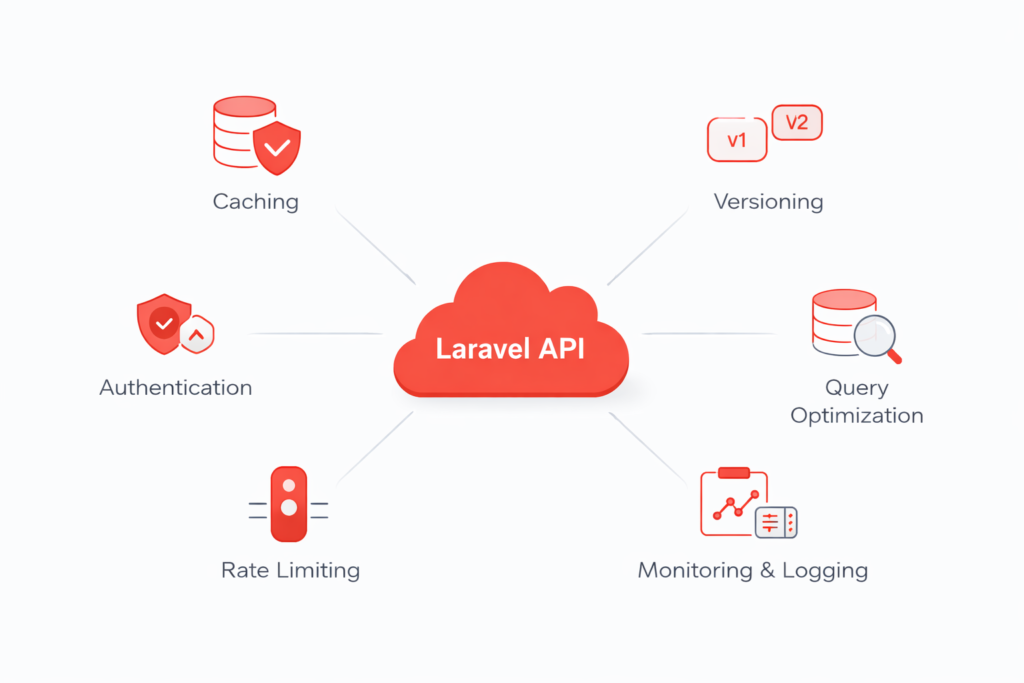
The architecture of your API sets the foundation for your entire digital ecosystem. A well-designed API architecture enables scalability, security, and maintainability while supporting your business objectives.
API-First Business Strategy: Competitive Advantage Through Connectivity
Adopting an API-first approach means designing your API before implementing your applications. This strategy ensures that your digital assets can communicate effectively, enabling faster development cycles and more consistent user experiences across all touchpoints.
Business Case: A retail chain implemented an API-first strategy for their e-commerce platform, allowing them to simultaneously launch their website, mobile app, and in-store kiosks with consistent functionality. This approach reduced their time-to-market by 40% and provided a seamless shopping experience that increased customer loyalty by 25%.
Microservices Integration: Agility in a Complex Digital Landscape
Laravel’s API capabilities excel at connecting microservices, allowing businesses to break down monolithic applications into manageable, specialized components that can be developed, deployed, and scaled independently.
Business Case: A financial services company restructured its legacy system into microservices connected by Laravel APIs. This transformation reduced deployment time from weeks to hours, decreased system downtime by 60%, and enabled them to launch new financial products 50% faster than before.
Cross-Platform Data Synchronization: Creating Consistent Experiences
In a multi-device world, ensuring data consistency across platforms is crucial for customer satisfaction. Laravel’s API features enable real-time synchronization across web, mobile, and emerging platforms like IoT devices.
Business Case: A fitness technology company used Laravel APIs to synchronize user data across their mobile app, web dashboard, and wearable devices. This seamless integration resulted in a 35% increase in user engagement and a 20% decrease in customer support requests related to data inconsistencies.
Building Client-Facing REST Services: The Backbone of Digital Business
REST APIs remain the workhorse of digital business, providing reliable and standardized ways for systems to communicate. Laravel’s approach to REST development combines industry standards with developer-friendly features that accelerate delivery.
Resource-Oriented Design: Intuitive Digital Interactions
Designing your REST API around resources rather than actions creates more intuitive interfaces that align with how developers think about your business domain.
Business Case: A logistics company redesigned its API around business resources like shipments, vehicles, and routes rather than technical actions. This resource-oriented approach reduced integration time for partners by 45% and increased API adoption by 60% within six months.
Response Optimization: Performance That Impacts Your Bottom Line
Optimizing API responses isn’t just a technical concern it directly affects user experience, infrastructure costs, and ultimately, your business results.
Business Case: An online media company optimized its API responses to include only necessary data, reducing payload sizes by 70%. This improvement decreased mobile data usage for their users, resulting in a 30% increase in engagement from mobile users and a 15% reduction in infrastructure costs.
Version Management: Evolving Without Disrupting
As your business evolves, your API must change too. Effective version management allows you to innovate without breaking existing integrations that your customers and partners rely on.
Business Case: A project management software company implemented a strategic versioning approach that allowed them to introduce major new features while maintaining backward compatibility. This strategy reduced customer churn during platform updates by 80% and increased enterprise sales by 25%.
Implementing Flexible GraphQL Solutions: Precision Data Delivery
GraphQL represents a paradigm shift in API design, giving clients unprecedented control over the data they receive. For businesses with complex data needs or diverse client requirements, GraphQL offers significant advantages.
Query Efficiency: Reducing Digital Waste
Traditional APIs often over-deliver data, sending more information than clients actually need. GraphQL’s precision approach eliminates this waste, improving performance and reducing costs.
Business Case: A mobile banking application switched from REST to GraphQL to address performance issues on slow network connections. By allowing the app to request exactly the data needed for each screen, they reduced data transfer by 65% and improved loading times by 50%, leading to a 20% increase in mobile banking usage.
Unified Data Access: Simplifying Complex Integrations
For businesses with diverse data sources, GraphQL provides a unified interface that simplifies client development and hides backend complexity.
Business Case: A travel aggregation company used GraphQL to create a unified interface for their complex backend systems, which included flight data, hotel information, and car rental services. This approach reduced development time for new client applications by 60% and enabled them to onboard three new travel partners in just two months.
Rapid Frontend Development: Accelerating Digital Initiatives
GraphQL’s flexible nature allows frontend teams to iterate quickly without waiting for backend changes, accelerating your overall development cycle.
Business Case: A SaaS company implemented GraphQL to decouple its frontend and backend development teams. This separation allowed the frontend team to launch a new user interface 40% faster than with their previous REST API, giving them a competitive advantage in a rapidly evolving market.
Securing Your Digital Assets: Protecting Business Value
In an era of increasing cyber threats, API security is not just a technical concern; it’s a business imperative. A security breach can damage your reputation, result in regulatory fines, and erode customer trust.
Implementing effective security measures is vital in Laravel API Development.
Authentication Strategies: Balancing Security and User Experience
Choosing the right authentication approach involves balancing security requirements with user experience considerations. Laravel offers multiple options to suit different business contexts.
For success in Laravel API Development, balancing security with user experience is crucial.
Business Case: A healthcare technology company needed to implement robust security without creating friction for medical professionals who needed quick access to patient information. By implementing a smart authentication strategy that adapted to context, they maintained high security standards while reducing login time by 80%, improving clinician productivity and patient care.
Laravel API Development emphasizes robust authorization frameworks for data protection.
Authorization Frameworks: Enforcing Business Rules
Effective authorization ensures that users can only access the data and functionality appropriate to their role, protecting sensitive information and enforcing business policies.
Centralized security management is critical in Laravel API Development.
Business Case: A multinational corporation implemented a sophisticated authorization system for its internal APIs, ensuring that employees in different regions and departments could only access appropriate data. This approach helped them achieve compliance with multiple international regulations and reduced the risk of data breaches by 90%.
In summary, Laravel API Development offers a comprehensive approach to building secure APIs.
API Gateway Security: Centralized Protection
Implementing security at the API gateway level provides consistent protection across all your services, simplifying security management and reducing the risk of configuration errors.
Business Case: An e-commerce platform implemented API gateway security measures, including rate limiting, request validation, and threat detection. During a major shopping event, these measures blocked over 100,000 malicious requests while maintaining performance for legitimate users, preventing an estimated $2 million in potential fraud.
Scaling for Enterprise Demands: Growth Without Limits
As your business grows, your API must handle increasing traffic, more complex operations, and higher availability requirements. Laravel’s scaling capabilities ensure your API can grow with your business.
Performance Optimization: Speed That Satisfies Users
API performance directly impacts user experience, conversion rates, and operational costs. Optimizing performance is not just about technical metrics; it’s about business results.
Business Case: A ticketing platform optimized its API performance to handle massive traffic spikes during popular event sales. By implementing intelligent caching and query optimization, they successfully processed 500,000 requests per minute during a major concert sale, generating $10 million in revenue in just 30 minutes without any system downtime.
Infrastructure Efficiency: Maximizing ROI
Optimizing your API infrastructure isn’t just about handling more traffic; it’s about doing so cost-effectively, maximizing the return on your technology investments.
Business Case: A video streaming service optimized its API infrastructure to serve 10 million users with 40% fewer servers. By implementing smart caching strategies and optimizing database queries, they reduced their infrastructure costs by $2 million annually while improving service quality.
Global Distribution: Serving Worldwide Markets
For businesses with global customers, API performance must be consistent across geographical regions. Laravel’s capabilities enable effective global distribution strategies.
Business Case: A gaming company implemented a global API distribution strategy using Laravel, deploying regional API endpoints that reduced latency for international players. This approach improved the gaming experience for players outside North America by 60% and helped them expand into three new international markets within a year.
Conclusion: What’s Next for You in Laravel API Development?
Final Thoughts: The Future of Your Laravel API Development Journey?
The world runs on connected apps. Whether you are building a new mobile app or fixing an old, slow system, Laravel API development gives you the tools to do it right.
By understanding the difference between a Laravel REST API and a Laravel GraphQL API, and by using simple Laravel API authentication methods, you can build something safe, fast, and easy to maintain.
Is your current API slow or hard to manage? Or are you starting something new and want to do it right the first time? The team at Binary Fusion is ready to help.
Want to see how Laravel compares to other options? Check out our guide comparing Laravel to [Node.js Pillar] to see which is better for your project.

![Flutter UI Design: Create Beautiful Mobile App Interfaces [2026]](https://blog.binary-fusion.com/wp-content/uploads/2026/02/featured-flutter-ui-design-guide-1.png)
![Laravel + React: The Complete Guide for Business Owners and Beginners [2026]](https://blog.binary-fusion.com/wp-content/uploads/2026/02/Gemini_Generated_Image_665qn8665qn8665q.png)